
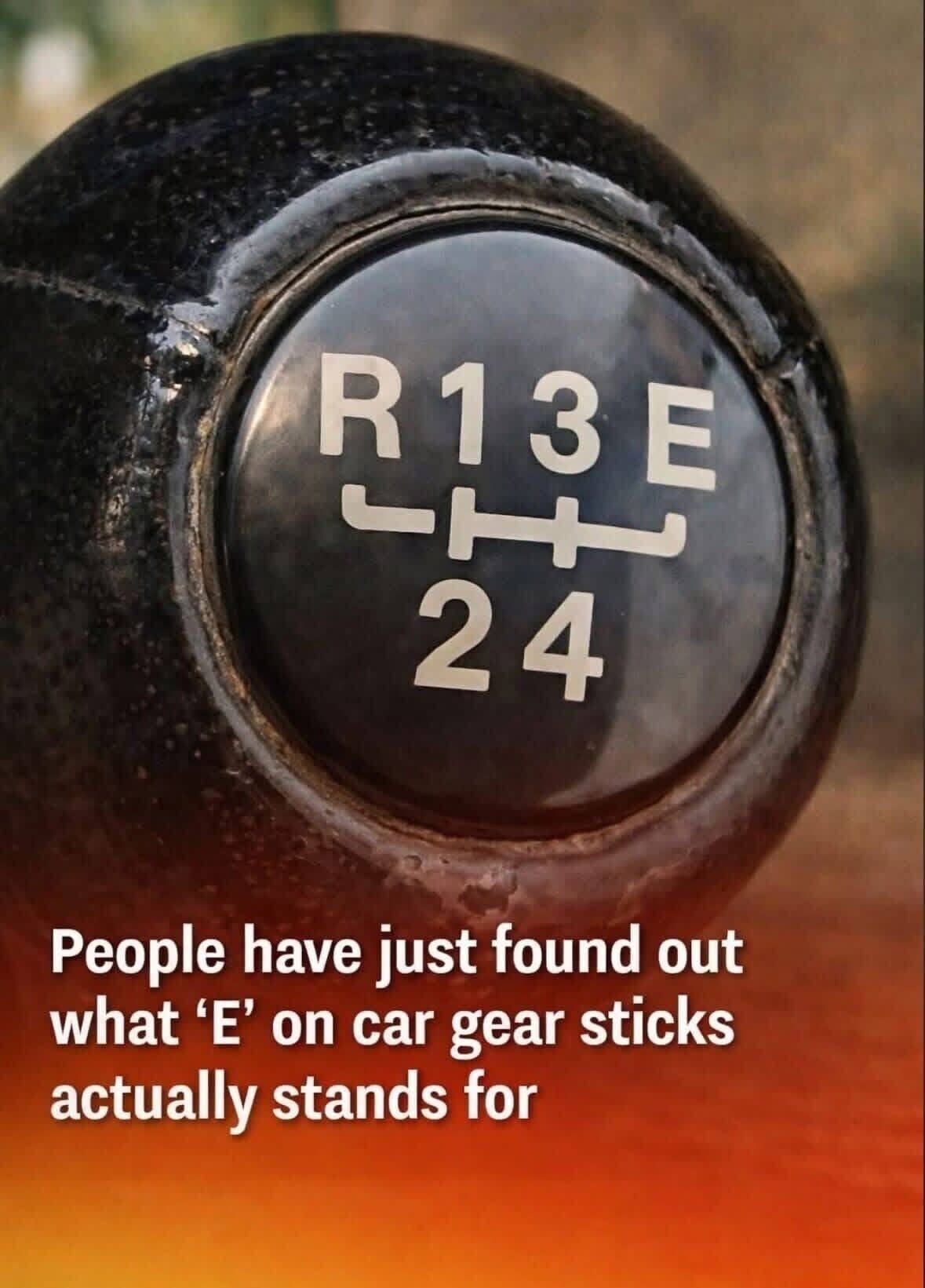
The “Economy” mode worked in a subtle but effective way. In vehicles equipped with this feature, selecting “E” would encourage the car to operate at lower engine speeds. Instead of pushing the engine to higher revolutions, which consumes more fuel, the system would prioritize smoother and more efficient performance. In some cases, it acted like a higher gear, keeping the engine relaxed during steady driving conditions such as highway cruising. The result was reduced fuel consumption without requiring the driver to constantly adjust their driving habits. At a time when fuel efficiency depended heavily on how a person drove, this feature offered a simple solution. It gave drivers more control over consumption, especially during long trips where small savings could add up significantly over time.
However, like many innovations from earlier eras, the “E” gear slowly faded away. As automotive technology advanced, manufacturers began integrating smarter systems that could handle efficiency automatically. Fuel injection systems replaced older carburetors, onboard computers began monitoring driving conditions in real time, and transmissions became more sophisticated. Modern cars can now adjust gear shifts, engine performance, and fuel delivery without any input from the driver. What once required a dedicated gear selection became something the vehicle could manage on its own. In that sense, the “E” gear became unnecessary. It wasn’t that the idea disappeared—it simply evolved into something more advanced and invisible. Efficiency didn’t go away; it just became smarter.
For those who remember it, the “E” gear represents a different era of driving—one where the relationship between driver and machine was more hands-on. Back then, understanding your car meant knowing when to shift, how to manage fuel use, and how to adapt to different road conditions. Features like Economy mode were part of that experience. They reflected a time when technology assisted the driver but didn’t completely take over. Today, much of that interaction has been replaced by automation. Cars make decisions in the background, optimizing performance without the driver even noticing. While this has made driving more convenient and efficient, it has also removed some of the mechanical awareness that older drivers once considered essential.
Interestingly, the meaning of “E” has taken on a completely new life in modern vehicles. Today, when people see the letter “E” in a car-related context, they are far more likely to associate it with “Electric” rather than “Economy.” This shift highlights just how much the automotive world has changed. Electric vehicles don’t rely on traditional gear systems at all. Instead of multiple gears, they often use a single-speed transmission and deliver power instantly. The driving experience is smoother, quieter, and fundamentally different from what came before. In many cases, even the gear stick itself has been redesigned or replaced with buttons, dials, or digital controls. What once symbolized fuel-saving within a gasoline engine now represents a complete departure from combustion engines altogether.
In a way, the story of the “E” gear is more than just a small piece of automotive trivia—it’s a reflection of how technology evolves. What starts as a practical solution to a specific problem can eventually become obsolete, only to be redefined in a completely new context. The letter “E” has traveled that exact path. It began as a simple tool for improving fuel efficiency, disappeared as cars became more intelligent, and returned as a symbol of a new era in transportation. For older drivers, it may bring back memories of a time when every gear shift mattered. For younger drivers, it serves as a reminder that even the smallest details in a car can have a story behind them. And for the industry as a whole, it stands as a quiet example of progress—how the past and future can sometimes be connected by a single letter.
ADVERTISEMENT

